Building job seeking for the AI Age

I lead an incredible team & designed job seeking for the AI Age. It lead to users adopting our recruiting platform, with 82% users joining. And with 91% satisfaction rate from the AI outputs, in corroborated that a user centred approach to AI can transform Glassdoor from a transactional job board into an intelligent career platform.

Team

2 product lanes
3 teams

My Role

Lead Designer
Design Strategist

Key Metrics

AI Satisfaction rate
Talent Sourcing opt-ins

Building job seeking for the AI Age

I lead an incredible team & designed job seeking for the AI Age. It lead to users adopting our recruiting platform, with 82% users joining. And with 91% satisfaction rate from the AI outputs, in corroborated that a user centred approach to AI can transform Glassdoor from a transactional job board into an intelligent career platform.

Team

2 product lanes
3 teams

My Role

Lead Designer
Design Strategist

Key Metrics

AI Satisfaction rate
Talent Sourcing opt-ins

What we shipped

Powerful tools to fine-tune resume, find jobs that match your preferences.
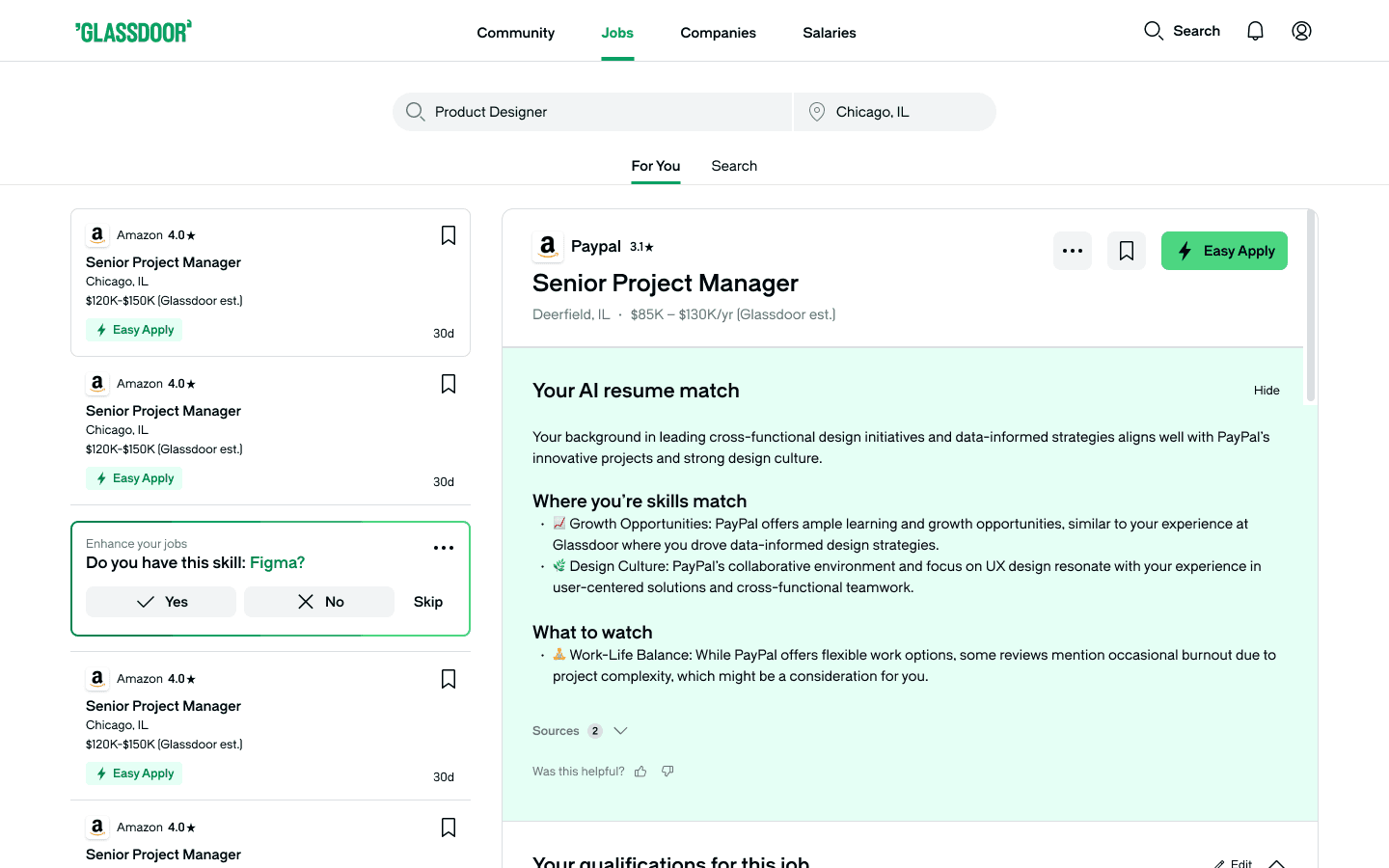
Custom LLM Prompts that absorb & summarize company reviews, job descriptions only available on Glassdoor
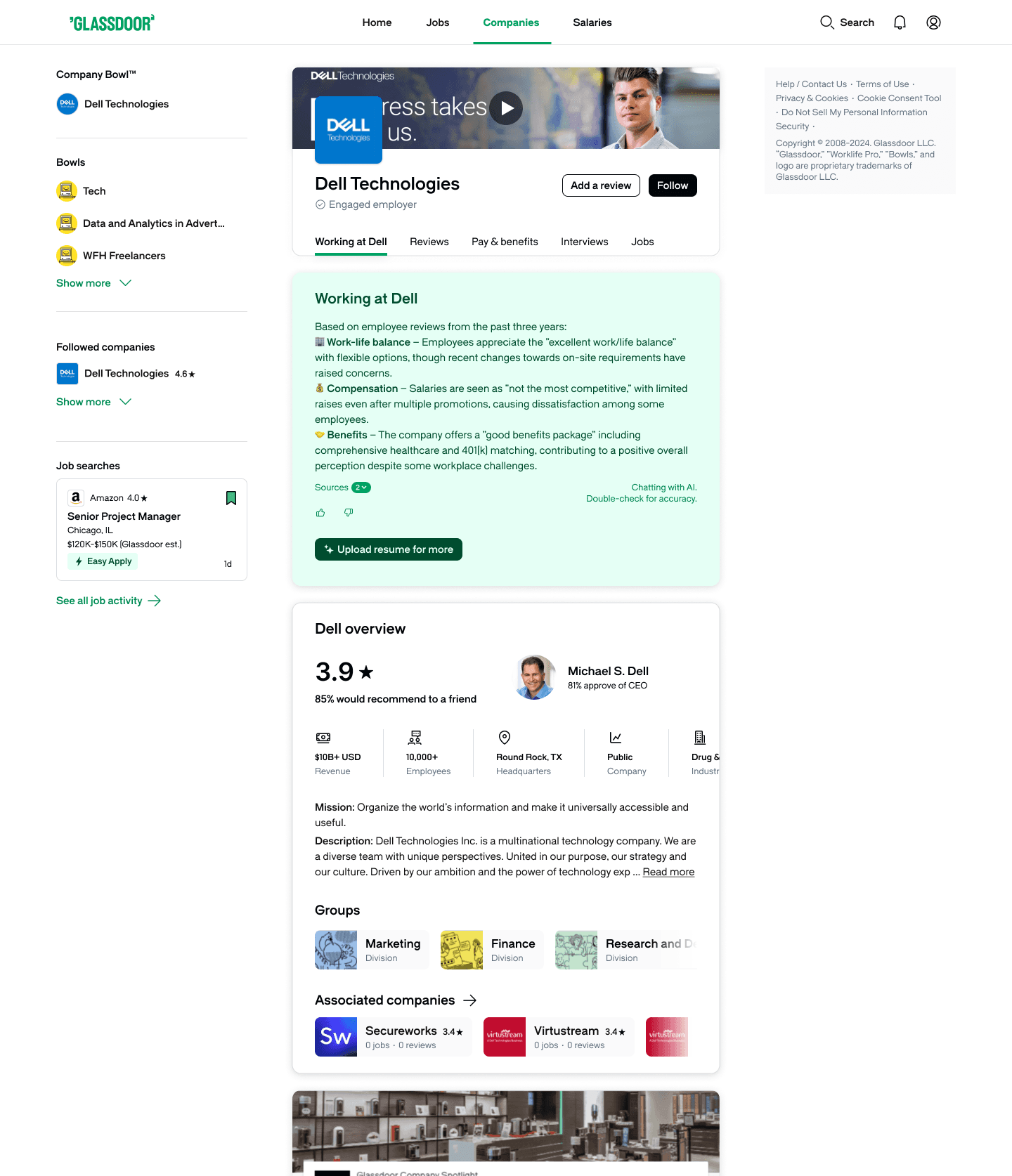
Simplified Company profile page navigation & content from 9 tabs to user's intent based tabs, all with individually crafted AI tools

Business goal

How might we turn Glassdoor's unique data into an experience no job board can replicate?


How might we make AI feel like an upgrade, not a replacement, for the job seeker?

Glassdoor has 15 years of reviews, salaries, and cultural insights from real employees. That’s a moat that competitors couldn't copy. The opportunity was to use that data as the foundation for an intelligent experience that helps job seekers make better decisions, while giving Glassdoor a reason to remain irreplaceable in an AI-first world.

User's challenge

Job seekers see a lot of information for every job, evaluating & deciding takes time.

Assessing favorite companies requires looking at 9 pages worth of company data, causing analysis paralysis

Job seekers are overwhelmed by information & options. Every decision required manual effort: reading, clicking, cross-referencing. The platform handed the users data and left them to figure out the rest.

My leadership opportunity

As the lead designer for Jobs and co-owner of Company Profile, I was uniquely positioned to drive AI integration across the platform

My leadership opportunity

As the lead designer for Jobs and co-owner of Company Profile, I was uniquely positioned to drive AI integration across the platform

My leadership opportunity

As the lead designer for Jobs and co-owner of Company Profile, I was uniquely positioned to drive AI integration across the platform

What I built

Faster evaluation of job opportunities

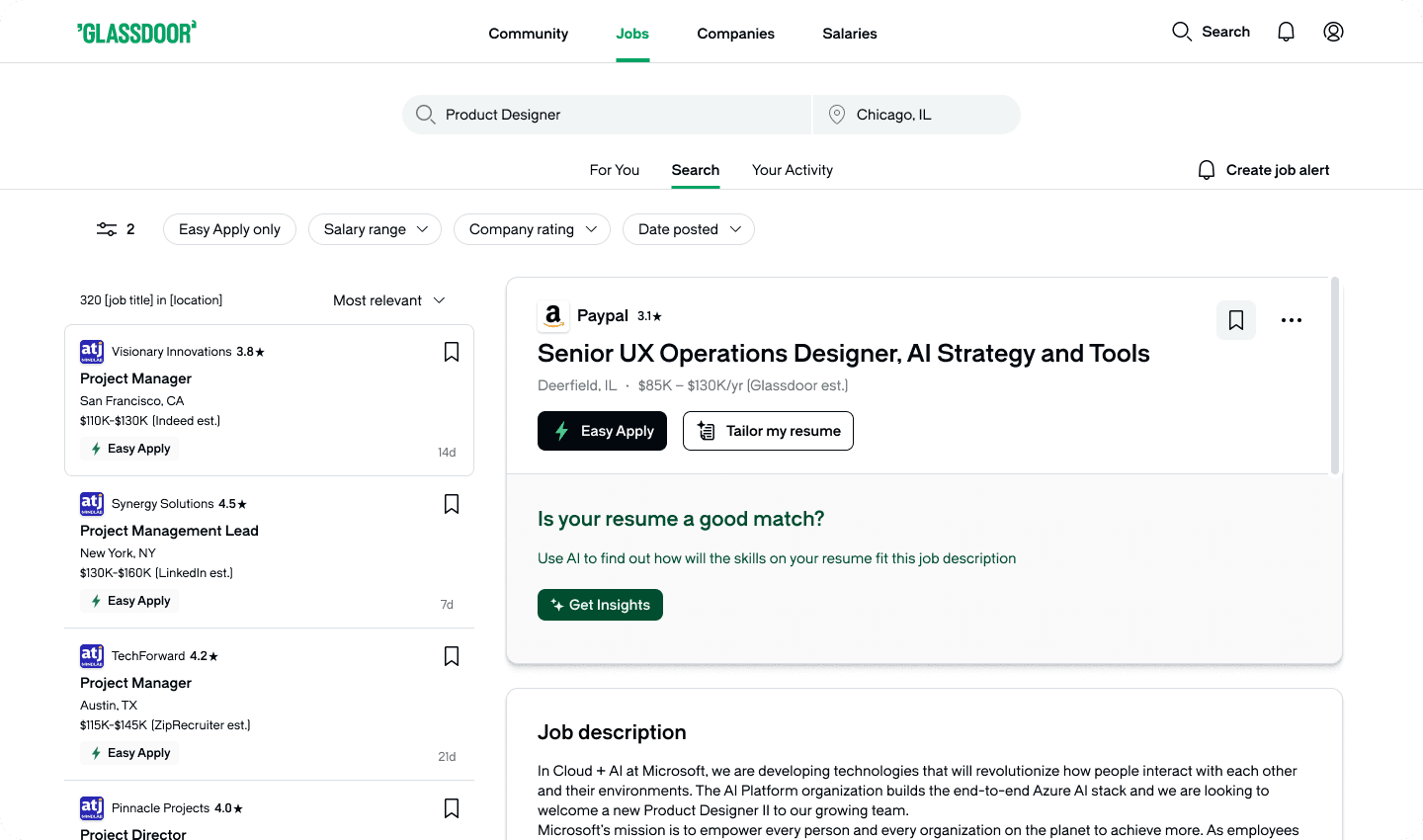
Contextual AI Section-aware AI tools inside job descriptions, salary details, and company reviews: surfacing relevant insights without pulling users out of their flow.
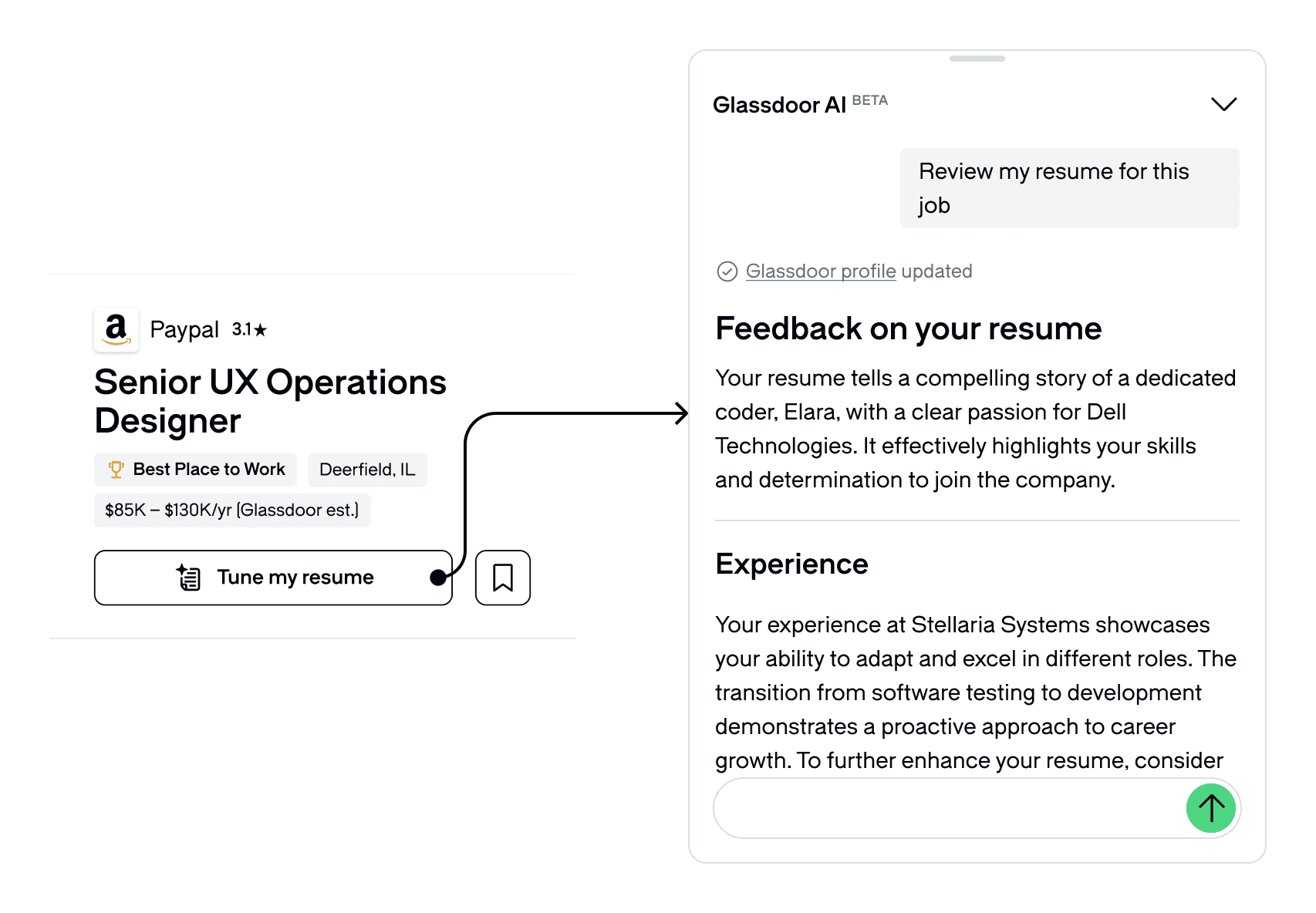
Tune My Resume A guided resume improvement tool on the job page that shows users exactly what to change for a specific role.

Tune My Resume A guided resume improvement tool on the job page that shows users exactly what to change for a specific role.

Simplifying company pages

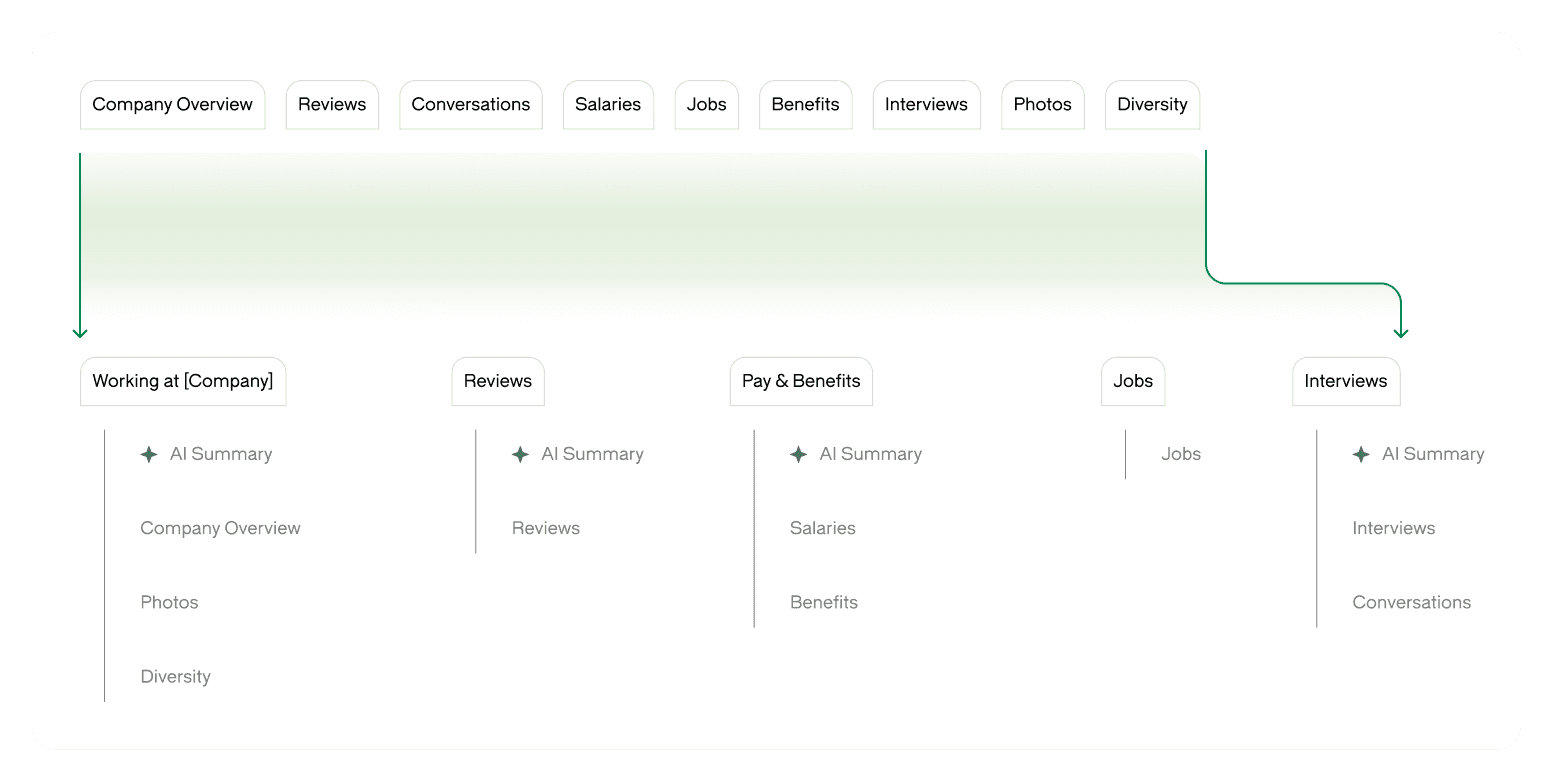
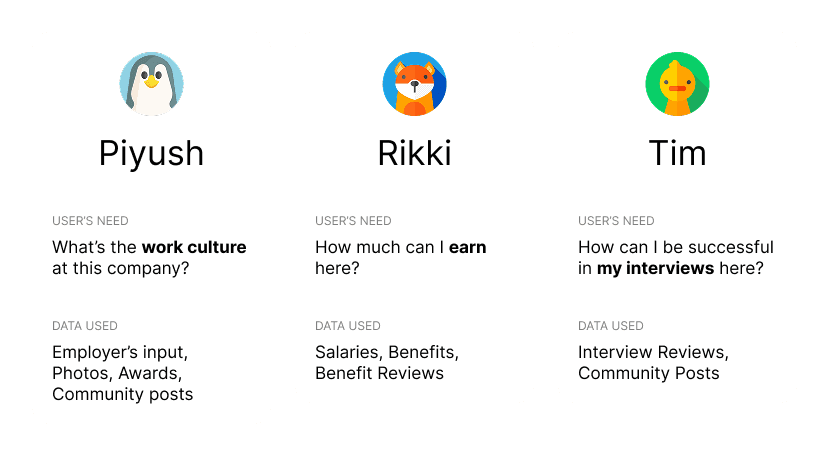
Intent-Based Navigation: Company page's 9 data based tabs reorganized into 5 sections built around user goals: Working culture, Reviews, Pay & Benefits, Interviews, and Open Roles.

Intent-Based Navigation: Company page's 9 data based tabs reorganized into 5 sections built around user goals: Working culture, Reviews, Pay & Benefits, Interviews, and Open Roles.

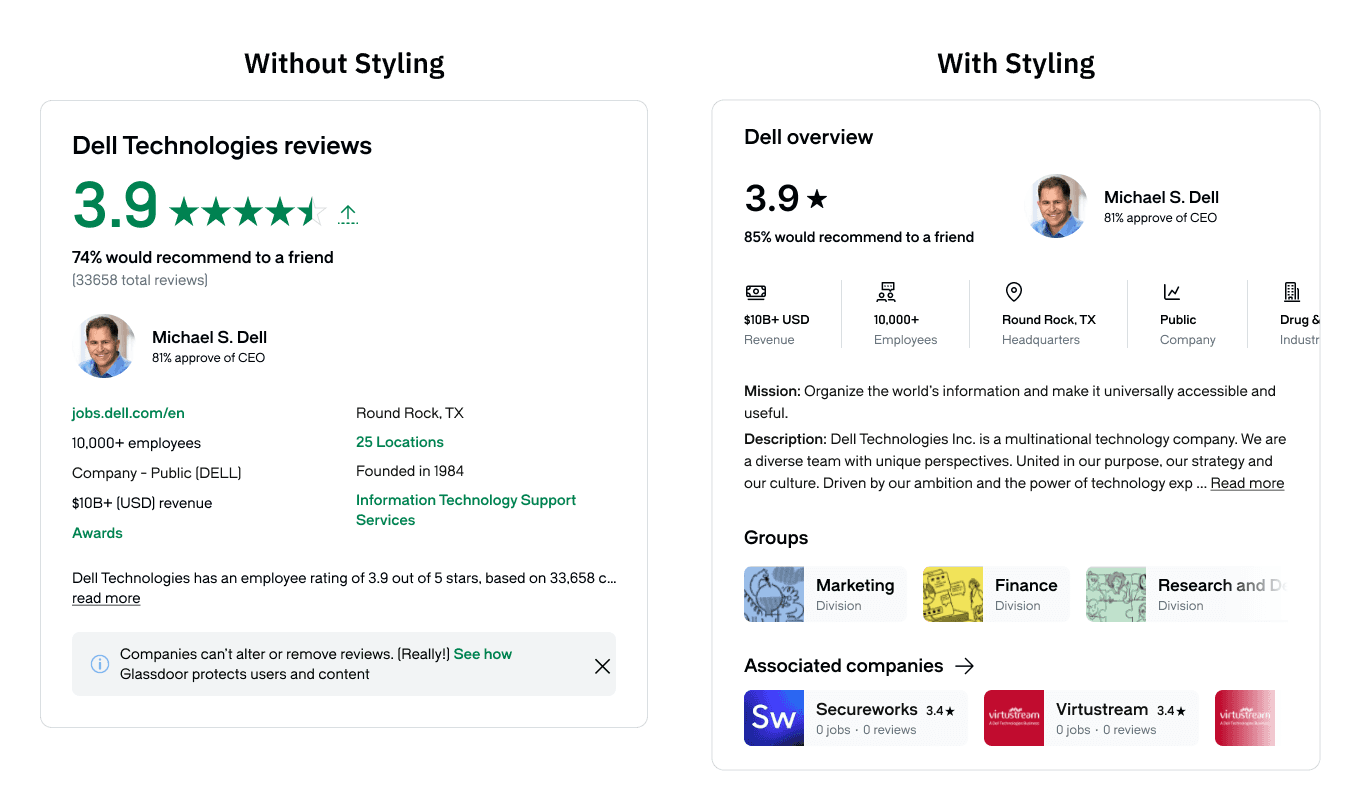
Employer Profile Info Architecture A cleaner visual layout for employer pages that surfaces the most important signals, without overwhelming the user.

Employer Profile Info Architecture A cleaner visual layout for employer pages that surfaces the most important signals, without overwhelming the user.

Defining user needs

Job seekers couldn’t find insights in the data on jobs and company pages

Job seekers were spending a lot of time trying to find answers to their core questions like work culture, career aspect but the pages merely showed the data, not the underlying story.

Based on the data I aggregated in Amplitude, research team’s briefs & mapping user’s journey.

I mapped the user’s unanswered questions to their job-seeking journey

By cross-referencing it with research findings from ~100 participants over the past year, I identified the exact UI elements on the page where user’s mentally thought of these questions but were left searching for answers.
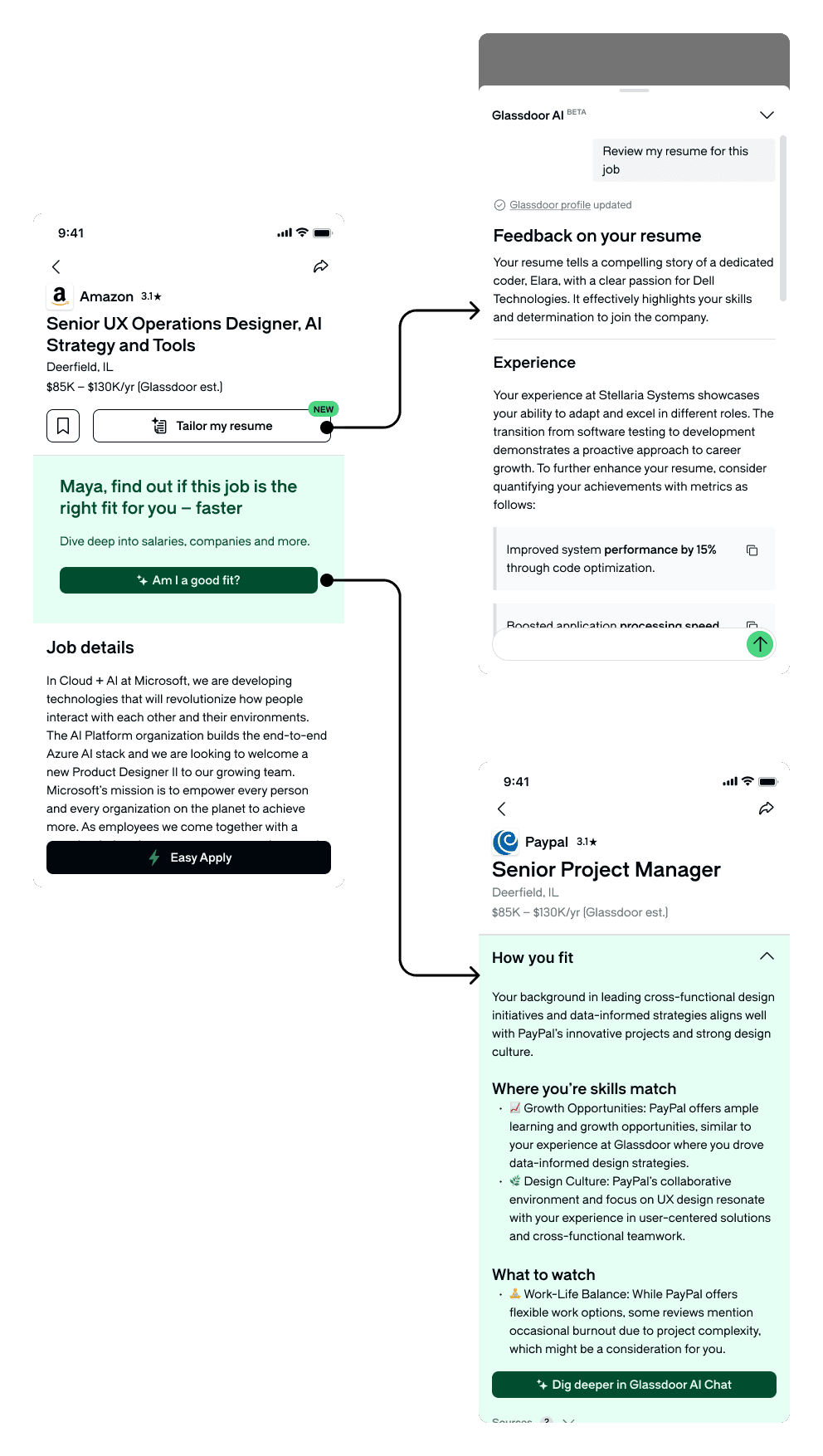
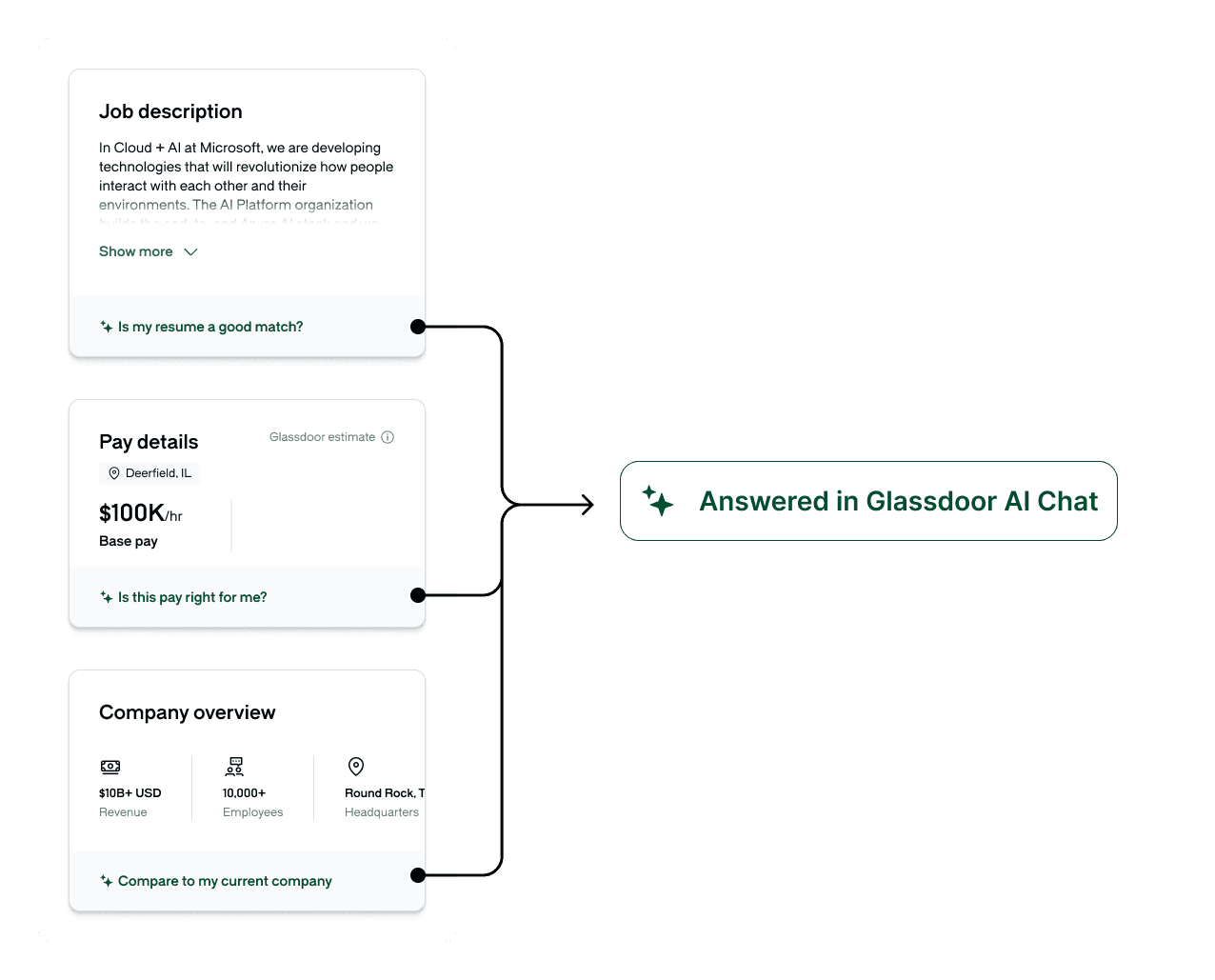
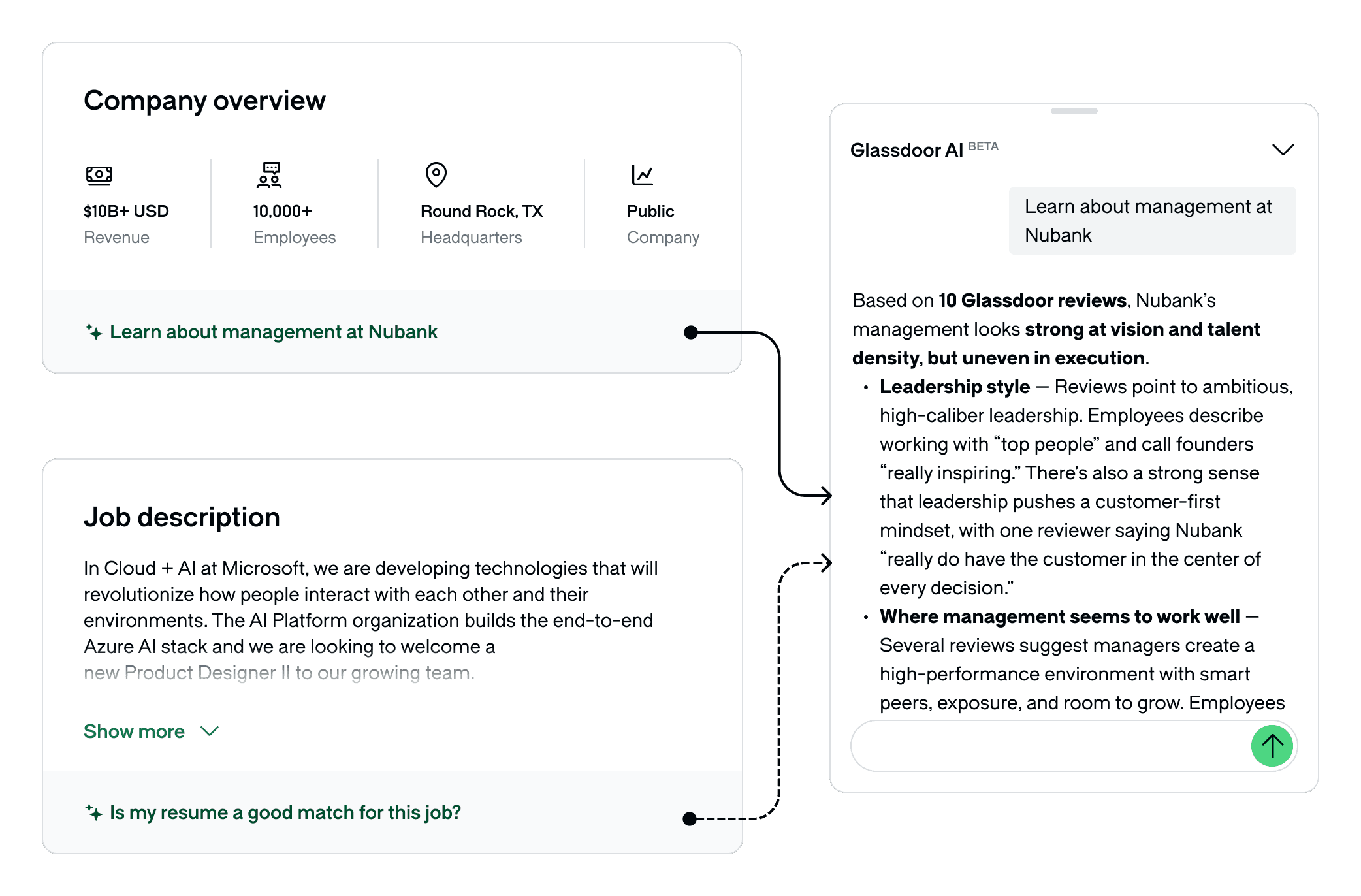
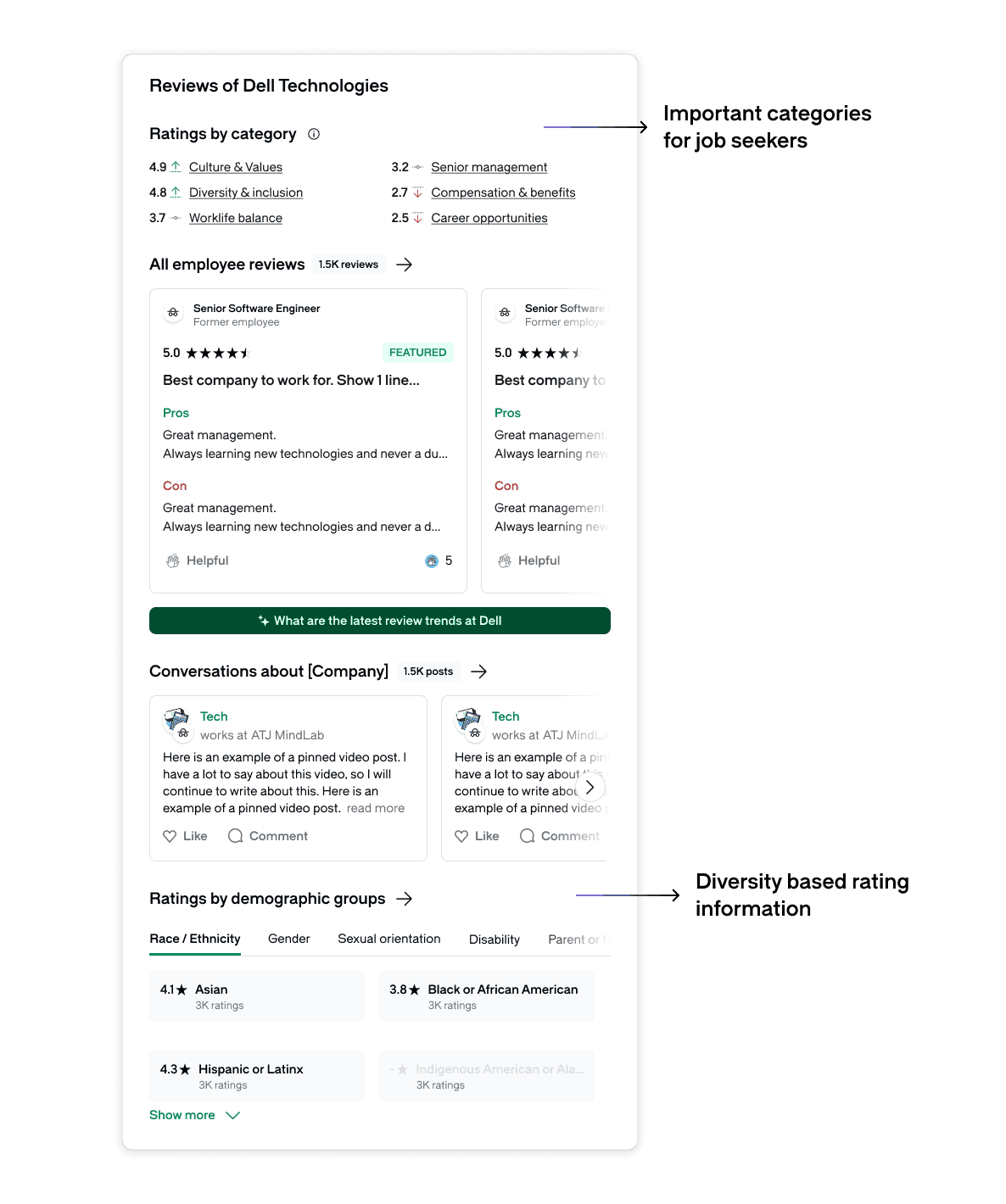
I crafted design patterns to introduce conversational, AI based insights

By surfacing the user’s questions as Buttons, it set the expectation that Glassdoor can provide the answers a human needs.

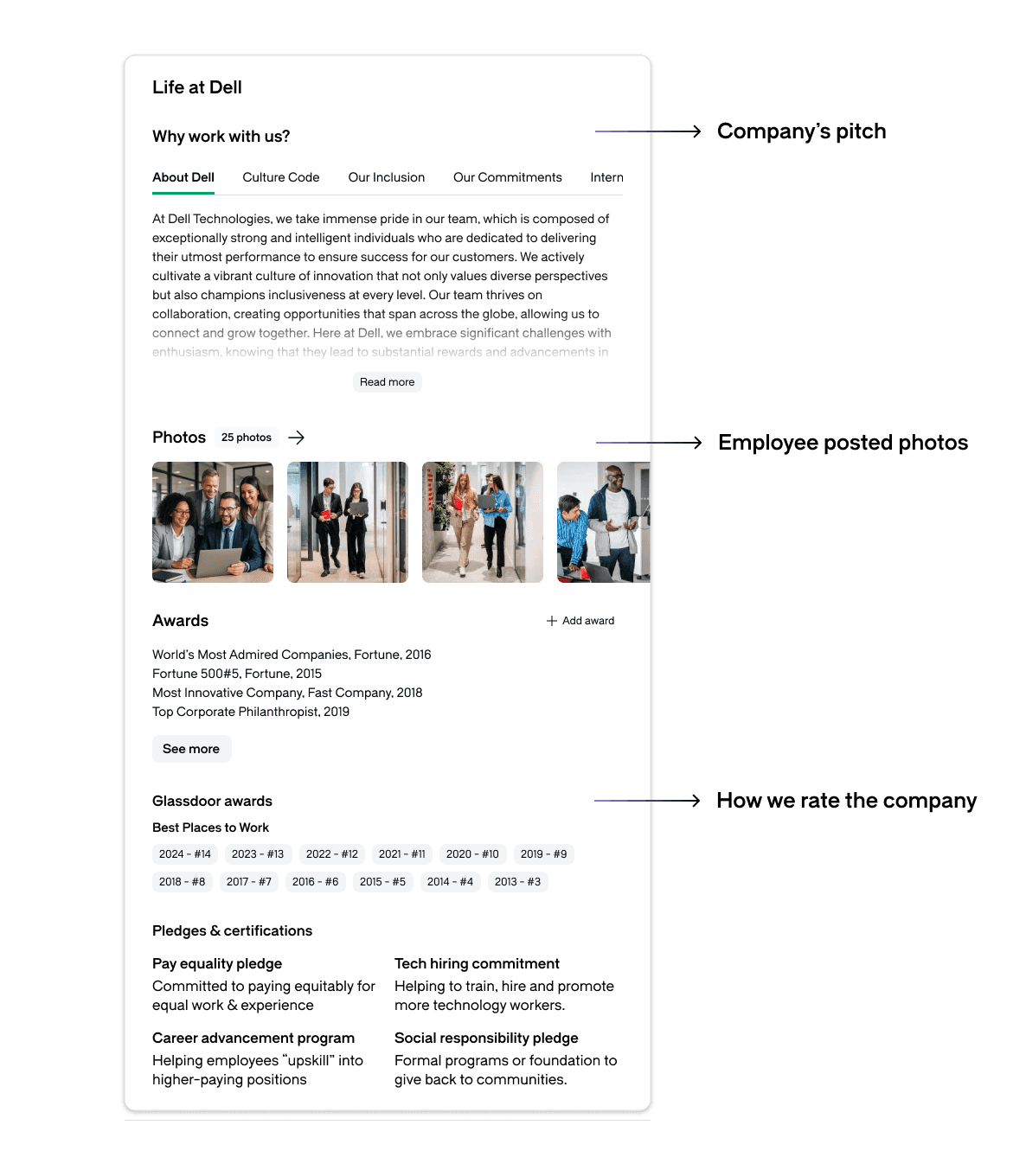
I crafted culture pages with quick access to key intents

I went back to the basics of UX design: showing only what the user needs in that moment. Our individual focus allowed us to do this.

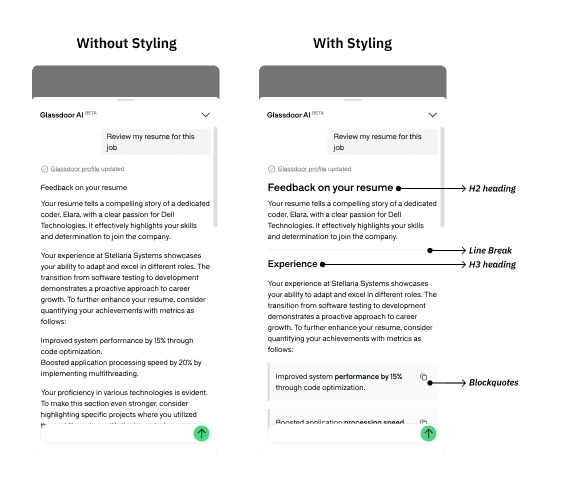
I designed UI improved for AI outputs with markdown

I employed my knowledge of markdown and engineering to push for markdown styling across the chat output.

This updated was adopted by AI Foundations Team & implemented across Glassdoor

I designed UI improved for AI outputs with markdown

I employed my knowledge of markdown and engineering to push for markdown styling across the chat output.

This updated was adopted by AI Foundations Team & implemented across Glassdoor

Simplifying complexity

User research validated that a user’s intent based information architecture outperformed data oriented structure

We experimented with current 9-tab structure, new 4-tab structure and a single page across 12 moderated interviews & 102 unmoderated tree test. It was clear that fewer, intent-based tabs reduced cognitive fatigue and made scanning significantly faster.
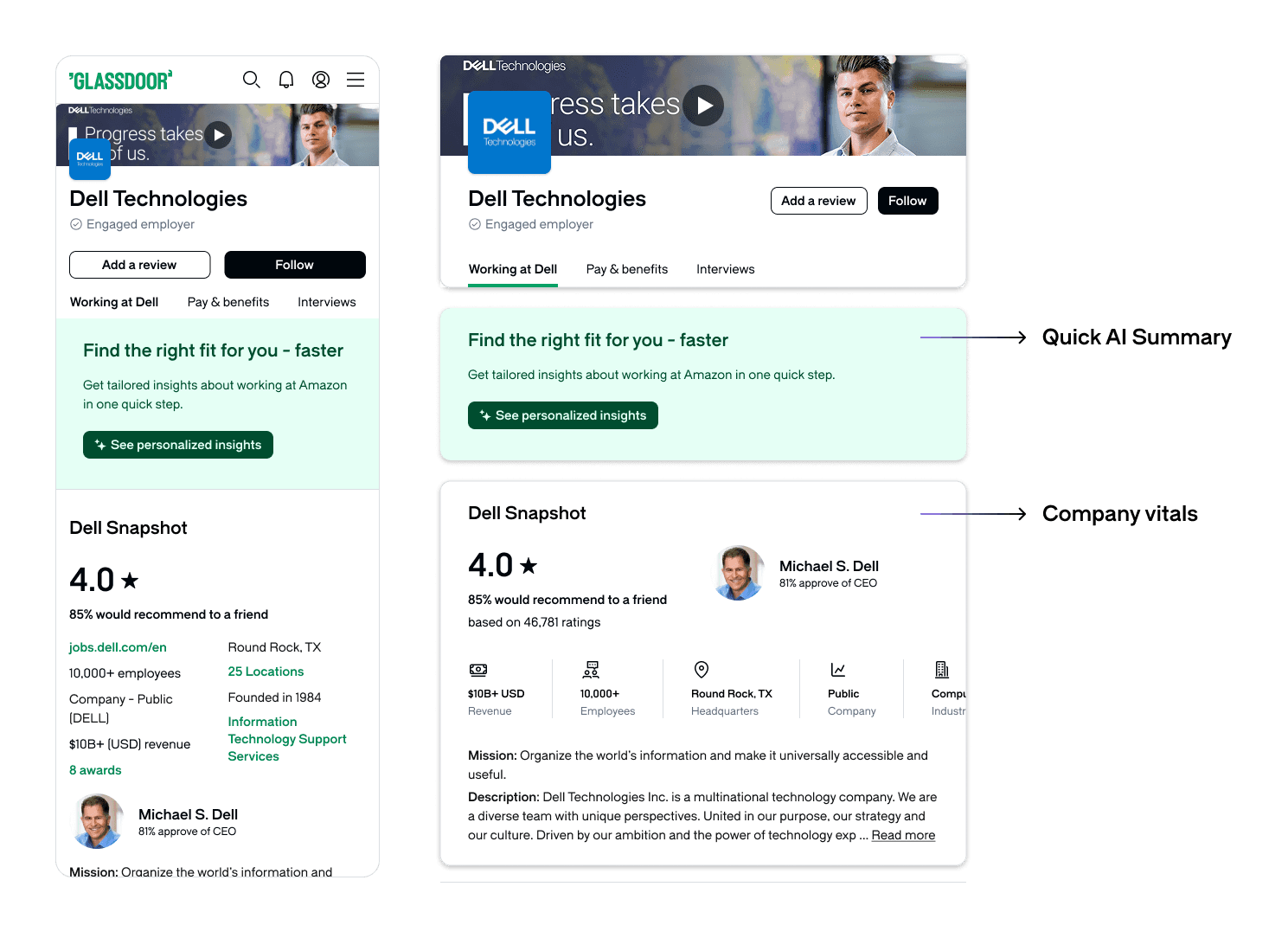
I assigned designers to build intent-based pages from scratch

The older approach of tackling review, salary, interview based modules one by one will bring us back to the same problem before. To truly embrace intent-based navigation, I understood designers should go look at user’s needs instead.

I assigned designers to build intent-based pages from scratch

The older approach of tackling review, salary, interview based modules one by one will bring us back to the same problem before. To truly embrace intent-based navigation, I understood designers should go look at user’s needs instead.

I crafted culture pages with quick access to key intents

I went back to the basics of UX design: showing only what the user needs in that moment. Our individual focus allowed us to do this.
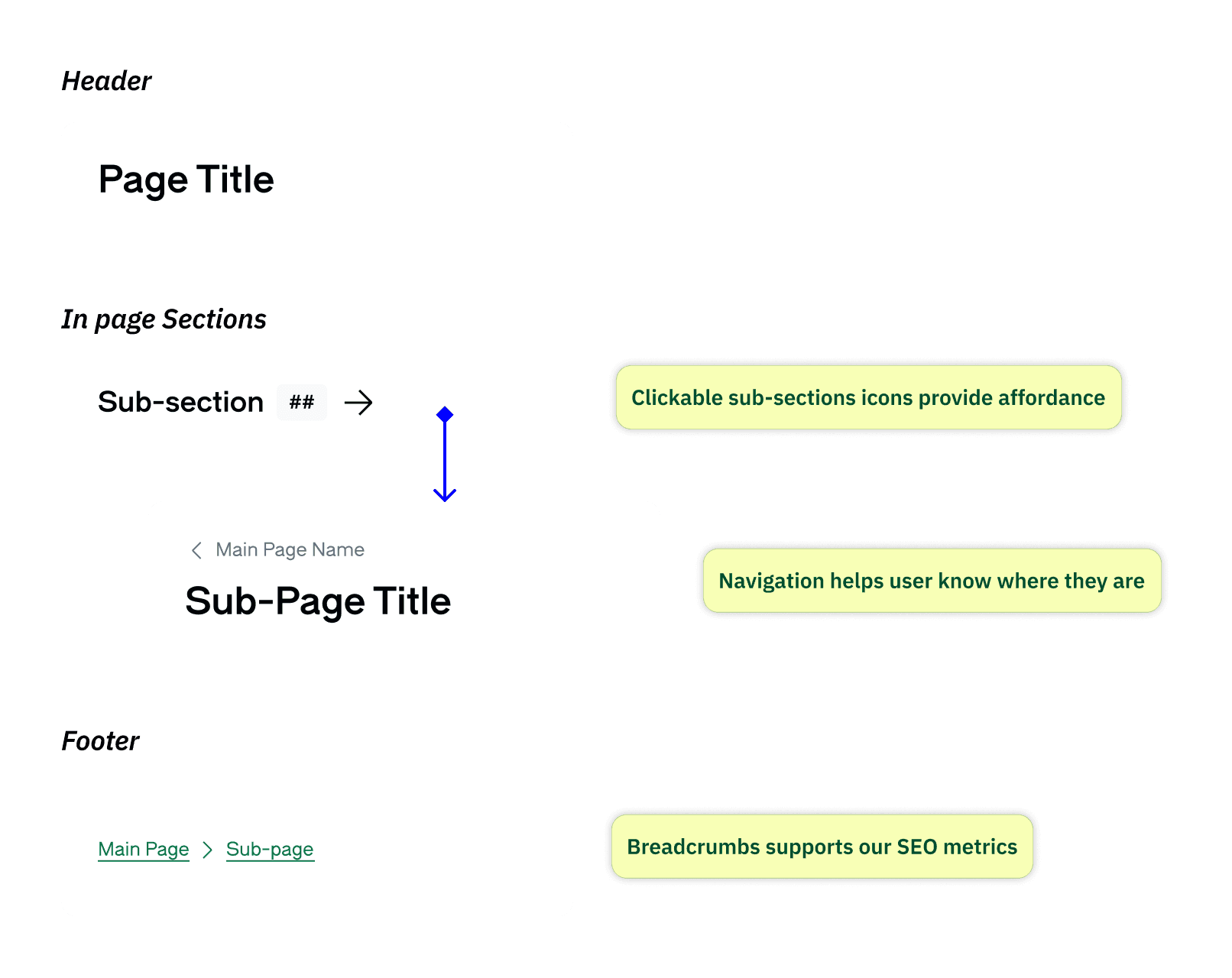
To address access to the data underneath, I designed a robust navigation hierarchy

Glassdoor always has users who want to look at the actual data and we should provide that level to access. Plus, we want the SEO inbound traffic to be unaffected with the IA changes.
I explored standard navigation patterns and customized them to fit Glassdoor’s approach.

To address access to the data underneath, I designed a robust navigation hierarchy

Glassdoor always has users who want to look at the actual data and we should provide that level to access. Plus, we want the SEO inbound traffic to be unaffected with the IA changes.
I explored standard navigation patterns and customized them to fit Glassdoor’s approach.

Outcome

Positive impact on users & business

This wasn't just about shipping AI features, it fundamentally repositioned Glassdoor's strategic direction. With these changes, the company is pivoting from an job apply market to quality connections space.

Users are showing more engagement in the job seeking experience based on the primary metrics:

1.0

Applications / User

Job applications per user, up from 1.2 before these projects.

0

%

AI Satisfaction Rate

AI usage Satisfaction rating from the users who use AI features on Jobs.

500

k+

Recruitable Profiles

Users landing on Job pages made their profile viewable to employers,

+

0

%

Recruitable Profiles

Of users landing on Employers pages made their profile viewable to employers.

+

0

%

Content Engagement

Engagement with High-intent content in employer pages

+

0

%

Logins

Logins on Jobs pages. +2% on Employer pages